
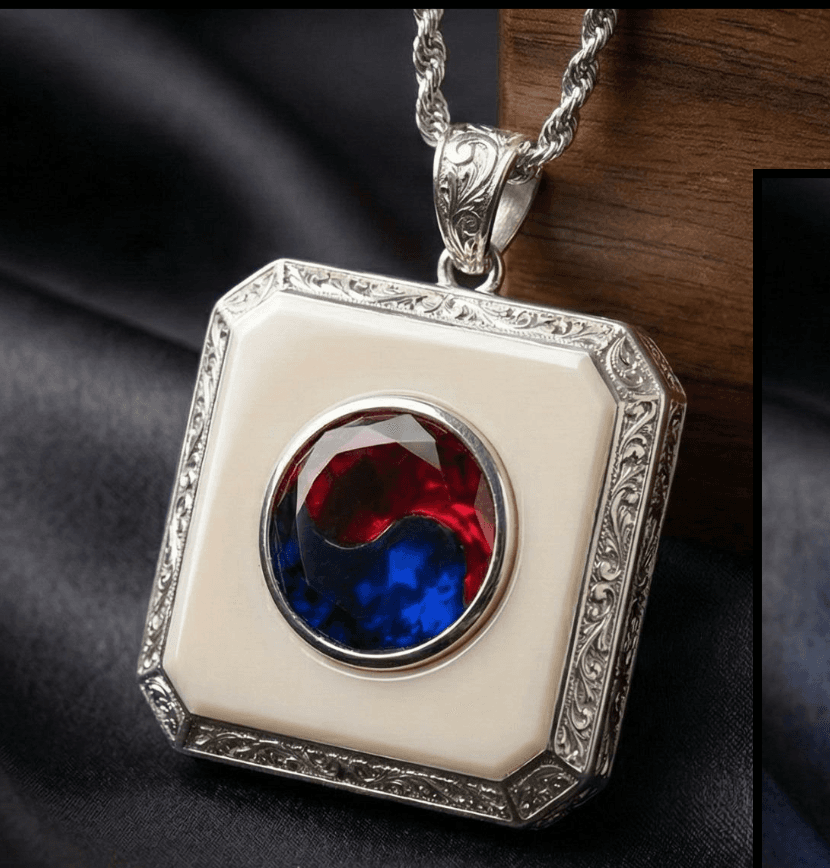

Twofold
Paired digital jewellery for long-distance strong-tie relationships — co-designed through a Responsible Research and Innovation framework to mediate intimacy without surveillance.
Overview
Smartphones have become the default medium for maintaining long-distance relationships — but appropriating SMS, calls, and notifications for intimacy reinforces language-based exchange and screen dependency while omitting the non-verbal constituents of closeness: shared presence, quiet routine, the subtle comfort of knowing someone is nearby.
Twofold is a pair of digital jewellery pendants designed to mediate connection between loved ones at long distance. Embedded sensors communicate passive presence, coordinated touch, and shared routine through light and haptic feedback — prioritising embodied, ambient interaction over notification-driven exchange.
The project was guided throughout by the Responsible Research and Innovation (RRI) framework (Owen et al., 2013), treating ethical analysis not as a final checklist but as a generative design method woven into every stage of ideation, stakeholder engagement, and iteration.

The design brief and opportunity
The brief was "living well with data" — specifically, how sensor data transmitted between two people might support wellbeing and connection rather than surveillance or anxiety.
Long-distance strong-tie relationships have grown more prevalent as travel, communication technology, and globalised labour markets separate people from partners, family, and close friends (Merolla, 2010). Smartphone-centred communication maintains these ties but introduces well-documented costs: screen fatigue, pervasive notifications, and an implicit pressure to respond. What's missing is a quieter, more peripheral channel — something closer to physical co-presence than a message thread.
Digital jewellery sits at an unusual intersection: historic associations with love tokens, commitment, and personal meaning translate positively to digital augmentation, affording what researchers describe as "stroking-and-patting" behaviours and passive presence (Kwon et al., 2025; Silina & Haddadi, 2015). Jewellery is worn close to the body, across contexts, and carries emotional weight that gadgets don't — which makes it uniquely promising for mediating intimacy, and uniquely sensitive when that intimacy involves continuous personal data.
Four ideated features
The initial design space comprised four features, each requiring distinct ethical consideration:
| Feature | Description |
|---|---|
| A — Light Glow Stone | Embedded LED communicating passive presence when the pendant is worn |
| B — Haptic Touch | Touch/vibration interaction to facilitate "checking in" |
| C — Photo Locket | Enclosed screen to display pictures or moments sent by a partner |
| D — Location Sharing | GPS tracking and visual representation of partner whereabouts |
Rather than developing all four toward implementation, the RRI process became the primary method for evaluating, refining, and in one case eliminating features before they caused harm.
Responsible Research and Innovation in practice
RRI comprises four overlapping strands: Anticipation (foreseeing risks), Reflection (evaluating values and assumptions), Engagement (inclusive stakeholder participation), and Action (responsive iteration). Each shaped the design in concrete ways.
Anticipation: moral imagination and the Tarot Cards of Technology
Using RRI Practice Cards (Portillo et al., 2023) and the Tarot Cards of Technology, the team conducted structured moral imagination exercises — generating scenarios beyond the intended use case to surface unintended consequences.
A scenario involving Feature A (Light Glow) during a work presentation revealed how a personally meaningful signal could become socially inappropriate in public or professional contexts — a risk amplified by the assumption that jewellery is worn continuously.
The Big Bad Wolf card prompted the most significant finding: continuous GPS location sharing could be exploited for surveillance and coercion within relationships. Freed et al. (2018) document precisely this pattern — intimate partner abusers systematically exploiting location technologies. This exercise made clear that a feature intended to support care could intensify existing relationship dynamics, including harmful ones, without adequate safeguards.
Reflection: positionality and embedded assumptions
Critical reflexivity and intersectionality frameworks guided examination of how team values and lived experience shaped design priorities. Using the Wheel of Power, the team reflected on whose relationships the design centred.
Early assumptions risked marginalising individuals by framing the concept around "a significant other" or "my other half" — implicitly reinforcing romantic exclusivity. Jewellery's cultural associations with commitment and monogamy shaped the inclination toward paired devices in ways worth questioning. The jewellery industry's history of inequality and extractive practices prompted reflection on aesthetics, longevity, and versatility as ethical — not merely aesthetic — choices.
My own positionality as a white, cisgender British man with Western-centric assumptions about relationship communication shaped this reflection directly. Personal experience of moving away from home sensitised me to the limitations of mediated communication while revealing privileges — assumed connectivity, emotional expressiveness — that don't generalise across cultural contexts.
Engagement: structured stakeholder co-design
Seventeen participants were split into four groups, each assigned one feature (A–D) and a structured template to discuss its good, bad, and weird qualities. Each group imagined using the feature in their own relationships, deliberated with peers, and presented a summary.

Key findings from the engagement:
- Location sharing raised immediate privacy and necessity concerns. Participants acknowledged limited utility but deemed it redundant alongside smartphones, with ambiguous mental models about cross-timezone coordination. The "stalking" risk surfaced unprompted across multiple groups.
- Haptic touch prompted apprehension about distraction, accidental activation, and the unsettling scenario of an imposter or third party making contact through a device that carries intimate meaning.
- Light glow generated concern about conspicuousness and context — participants wanted control over colour and intensity; "I don't want to be Ironman in public."
- Photo locket was warmly received for its private, anticipatory quality, though concerns about delicacy (a screen on jewellery) and the anxiety of a partner not wearing the pendant surfaced.
The exercise validated a consistent direction: subtle, intentional, controllable interactions rather than persistent or on-demand connectivity.
Action: Crazy Eights and responsive iteration
Crazy Eights rapid sketching translated findings into design responses — generating eight distinct ideas in eight minutes to produce a high volume of options before converging.

The most significant design changes that emerged:
Location sharing was omitted entirely. Given the severity of stalking and surveillance risks, combined with near-unanimous stakeholder opposition, GPS tracking was removed and replaced with discrete contextual statuses (asleep, at home, out) inferred via Bluetooth proximity to a bedside charging dock. This combined features A and D to support shared morning and nighttime rituals — reassurance without invasive tracking.
Fingerprint-authenticated haptic touch replaced on-demand vibration. A soft coordinated response activates for both partners only when reciprocated, emulating mutual handholding rather than one-sided interruption. This directly responded to concerns about accidental or intrusive signalling.
Two stones rather than one were incorporated into the artefact — visually representing both partners, providing feedback for the wearer, and eliciting a tangible sense of togetherness.
A companion app enables independent configuration: deactivation, do-not-disturb modes, and availability management. This empowers users to disengage safely when needed — a particularly important safeguard for individuals in controlling relationships.
The form factor was redesigned from a necklace to a versatile pendant attachable to bracelets or keychains. This accommodates diverse cultural preferences, styles, and abilities without prescribing a single form.
Design methods across the process
Beyond RRI, the project employed a full Double Diamond design process:
- Concept sketching and persona building — generating diverse relationship contexts beyond the romantic couple, including familial and platonic ties
- Visual storyboarding — communicating ambient interaction scenarios across daily routines
- User journey mapping — identifying moments of connection, separation anxiety, and technological friction across a long-distance day
- Bodystorming — physically enacting wearing the device across contexts (at work, at dinner, while sleeping) to surface embodied constraints
- Expert appraisal and usability evaluation — structured assessment against design heuristics and interaction design principles
Reflections
Responsible innovation is generative, not just corrective. The most valuable outputs of the RRI process were not the features we removed or the risks we mitigated — they were the design ideas we would never have reached without structured moral imagination. Fingerprint authentication, the two-stone visual representation, the versatile pendant — all emerged from engaging with risks rather than avoiding them.
Jewellery embeds values whether you intend it to or not. The cultural associations of jewellery with commitment, exclusivity, and monogamy shape how people read the artefact before they've interacted with it. Designing with that cultural weight — rather than ignoring it — produced more honest and inclusive outcomes.
The "right amount" of connection is subjective and relational. Miller's Goldilocks principle surfaced the fundamental difficulty: there is no objectively correct level of ambient connectivity, and what feels comforting to one person feels intrusive to another. Design for intimacy must therefore prioritise user control and intentionality over any assumed ideal — and remain genuinely open to the possibility that some people will turn it off entirely.
Mediating bodily data between two people carries irreducible privacy risk. No design decision fully resolves the tension between the intimacy enabled by continuous on-body data and the harm potential of that same data. This requires ongoing alignment with regulation, security standards, and — most importantly — the evolving consent and expectations of the people in the relationship.
Links
- RRI Report: Code Pendants — Applying the Responsible Research and Innovation Framework to Paired Digital Jewellery (Newcastle University, 2025)